Since 1424
THE KINGDOM OF BANA
Since 1424
TRADITION & HERITAGE
Since 1424
Residents
Km from City
Years of History
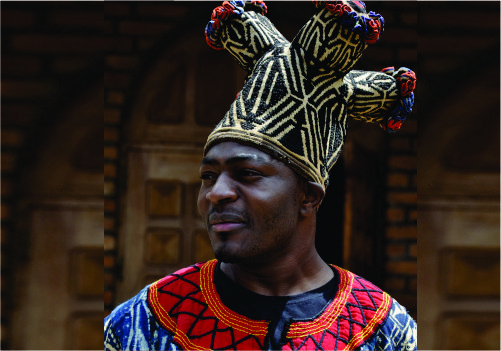
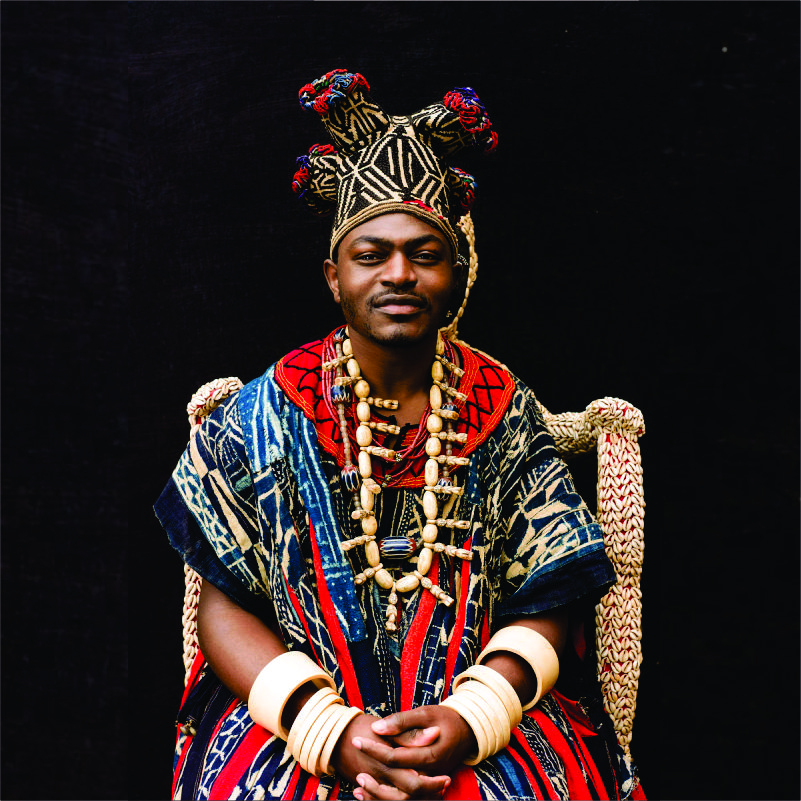
His Majesty King Happy V, whose legal name is Sikam Konchipe Sylvestre, was born on February 6, 1986 in Bana, to his father Jean Bosco Konchipe and his mother Tchatchouang Claudine. He completed his primary education at a public school in Bana, earning his Elementary School Certificate (CEPE) in 1998, then attended the Lycée de Bafang for secondary school from 1998 to 2003. His studies were interrupted in 2003 when he ascended to his father's throne. Since 2010, his commitment to good governance and justice has led him to pursue a Law degree at the Faculty of Law of the University of Dschang. He holds a first-degree chieftaincy title — the highest rank in the traditional chieftaincy hierarchy in Cameroon — and serves as an auxiliary of the State Administration.
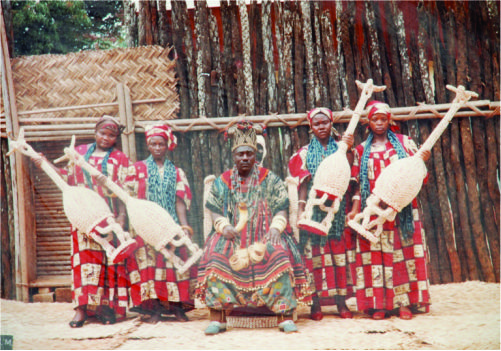
He serves as guardian of the kingdom's traditions and custodian of its cultural and ritual objects, and promotes the unity of the kingdom's subjects. Driven by a passion for social justice, his reign is focused on modernising the kingdom, developing infrastructure, improving healthcare and education, and creating opportunities for young people by opening pathways for diaspora investment. Since his accession to the throne, agriculture and tourism have grown exponentially. He is a Board Member of the Patcha Foundation and Vice President of the Association of Chiefs of Western Cameroon.
The earliest chiefdoms in this part of the Bamiléké country were founded in the 15th century on the heights of the Badoumla plateau, which had already been inhabited during the Neolithic period, as evidenced by a lithic toolkit discovered during the 1974 archaeological mission of F. Paris. The word "Dak" (ndak) means "low ground." Lowland areas are traditionally reserved for the elite. The chieftaincy is located in the No quarter. "Ndum" means "above" or "on high."
Bana is a customary kingdom. Tradition holds that it was founded in 1379 by three hunters from Mendou (present-day Bamedou): Nza Pwandji, Nza Tiayah, and Nza Tchokogwé. Later, Nza Pwandji became Fon Tckoko and gave his daughter Menkwé in marriage to his friend Nza Tchokogwe. Their union produced four children: Nsialieu, Nanga', Halieu, and Tchokogwé. Halieu was a formidable warrior and conqueror who imposed himself through courage and fear among neighbouring peoples. In 1424, Halieu founded the Bana Kingdom and launched territorial conquests.
In a work by Stéphane de Mégahshi titled Bana, published by Éditions Grassfields in July 2014, the author notes that Bana was originally called "Ndeu" (now the Zaaleu family estate in Kap). It was only later, following the crusades of Fon Halieu, that Ndeu became "Nnée," meaning "those who pursue" or "those who push in to settle." The word Bana derives from "Pah Nnée."
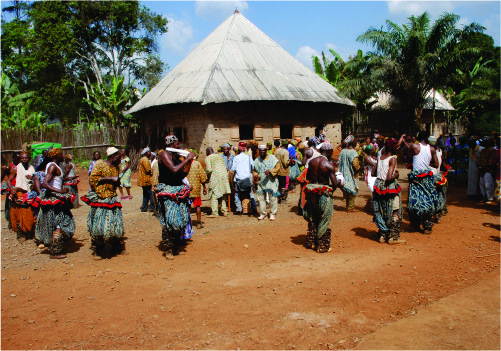
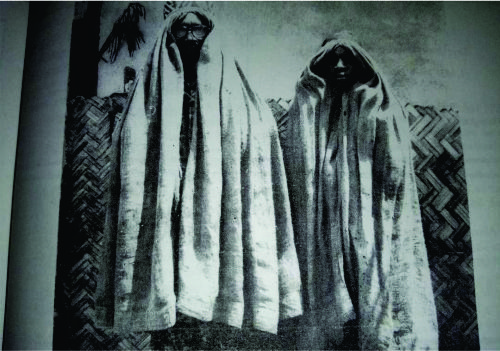
The Kingdom is governed by chambers that each play important roles. These include the mystical and secret society known as the KOUNGAA, as well as lodges and secret societies whose members are descendants of founding members. Among these brotherhoods are: Pagwap, Nkouga, Komji, Dakop, Chutok, Kossie, and Pountet. Some of these chambers are made up of individuals ennobled in recognition of their contribution to the kingdom's glory.
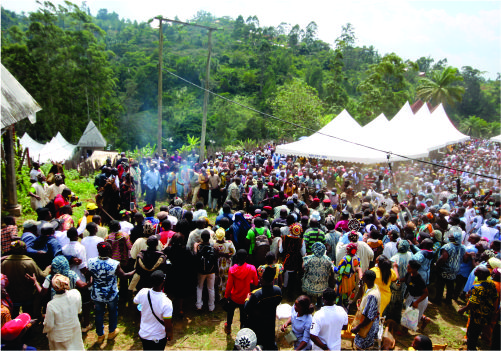
Kingdom life is animated by elite associations that meet in Bana on the 1st, 2nd, 3rd, and 4th Saturdays of the month, as well as in major cities and among the diaspora. Young people are organized within the Association of Young Bana Students and Pupils of Cameroon (AJEEBC). Associations working for the welfare of the Bana people include: Banamed, Bana En Avant, Fils et Filles Bana, Bana Notre Héritage, Bana New Generation, Bana New Vision, and Conajeb.
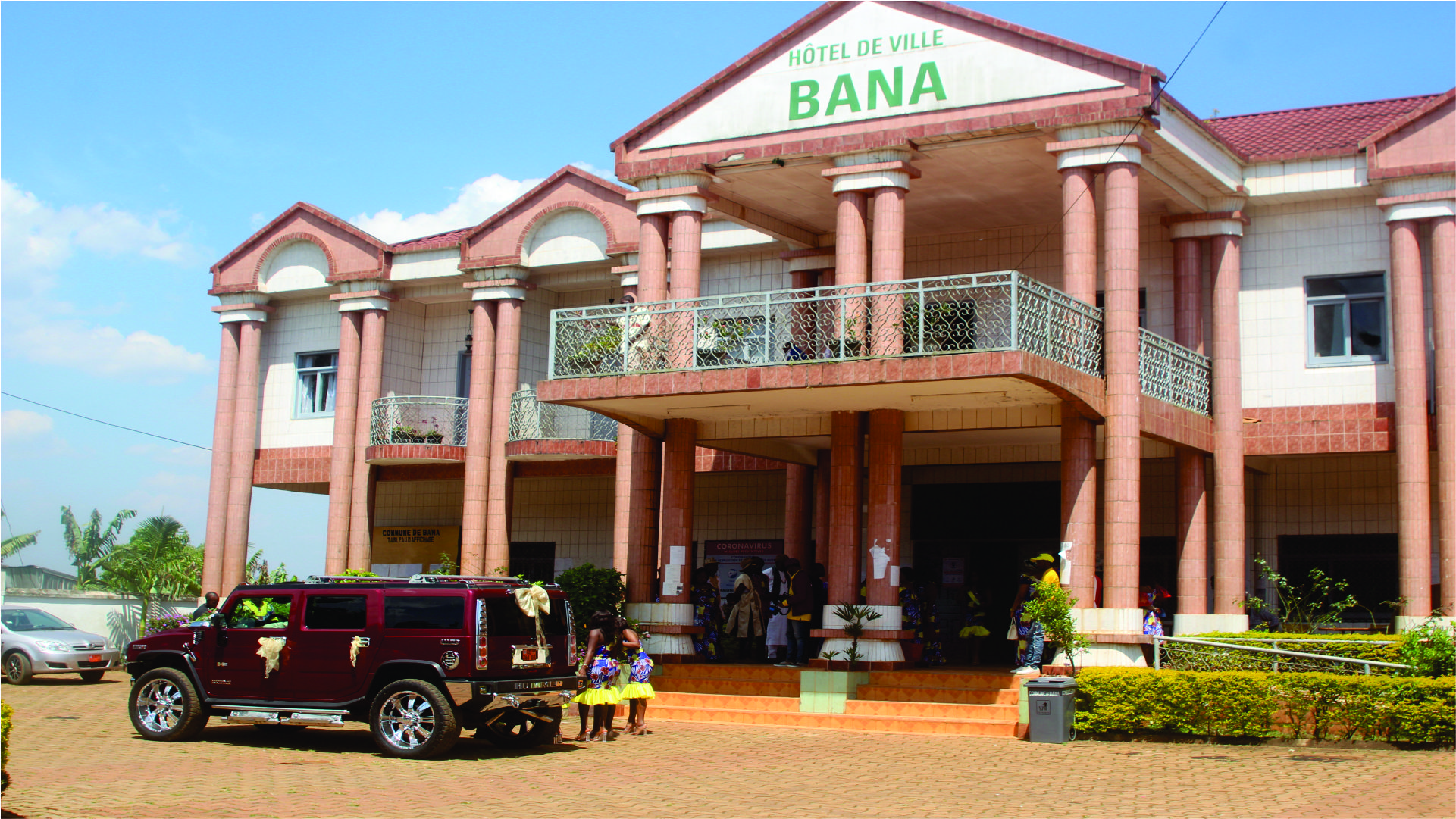
Beyond Bana proper, the municipality includes the following villages: Bakassa, Bandoumkassa, Batcha, Foumbe, Pūmboô, Tentcheu, and Badoumla. They belong to five groupings: Bana, Badoumkassa, Bakassa, Badoumla, and Batcha. The Bana grouping consists of 20 villages or quarters, each a third-degree chieftaincy: Bakam, Bandoumla, Bapou, Bassoh, Domla-Nsap, Keussieu, Kotou, Lougou, Nylon, Panchi, Pouhkotcha, Poumbo, Soupou, Tcha, Tientcheu 1, Tientcheu 2, Tougou, Toula, Tuma, Yack.
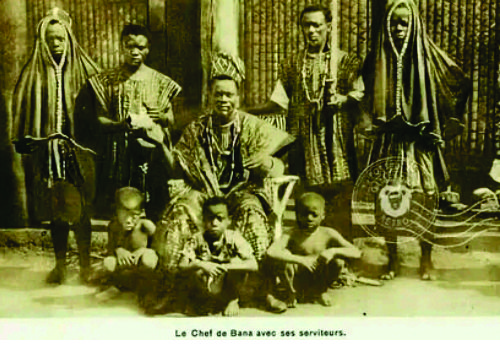
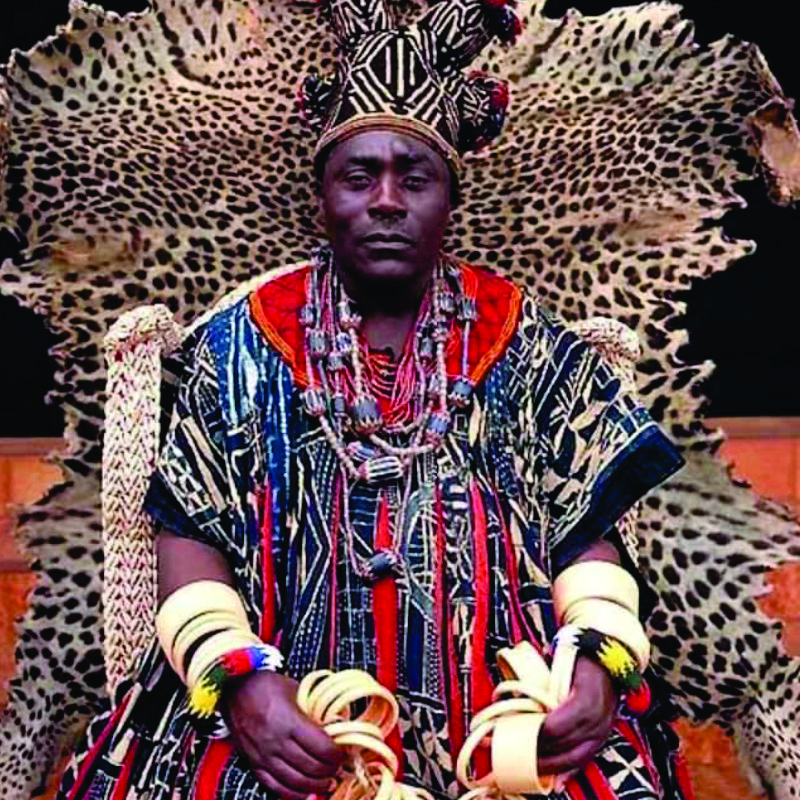
The German administrative post of Bana was established in 1903. On February 10, 1910, the German colonial administration established a first-degree superior chieftaincy in Bana. From 1916 to 1920, Bana was the capital of the Western Circumscription under French administration, which comprised the Subdivisions of Somo, Bana, and Foumban. Bana was elevated to a district of the Haut-Nkam Department in 1961, then to a sub-prefecture in 1967. Today, Bana is led by His Majesty the late Sikam Happi V, successor in 2003 to Fon Konchipe Happi IV.
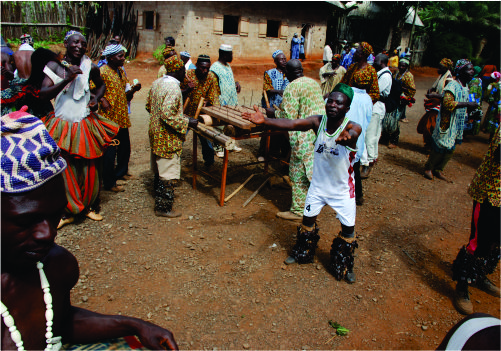
Religion: The Bana people are Catholic and Protestant. However, the majority practise ancestral African spirituality, primarily animism and ancestor veneration. The local language spoken in the village is Nufi, which residents simply call "Bana." In Bana, the market takes place once a week according to the traditional calendar — this is called "market day." The traditional week has 8 days (Ntu'Kwa, Ntu'ntaa, Lie'nkwe', Nkaatee, Nzengoo, Ncomntee, Nzingu, Nziso), so market day shifts by one day each week relative to the Gregorian calendar.
According to the 2005 census, the municipality had 10,254 inhabitants, of whom 2,878 lived in Bana Ville — though there is also a diaspora of emigrants who consider themselves part of the village. The Bana diaspora is concentrated in France, Germany, London, the United States, and Canada. They organise themselves into associations. The King appoints a representative in each region.
Kingdom life is animated by elite associations that meet in Bana on the 1st, 2nd, 3rd, and 4th Saturdays of the month, and in major cities and among the diaspora. Young people are organised within the Association of Young Bana Students and Pupils of Cameroon (AJEEBC). Associations working for the welfare of the Bana people include: Banamed, Bana En Avant, Fils et Filles Bana, Bana Notre Héritage, Bana New Generation, Bana New Vision, and Conajeb.
© royaumebana. All Rights Reserved.